Find where your building's money leaks.
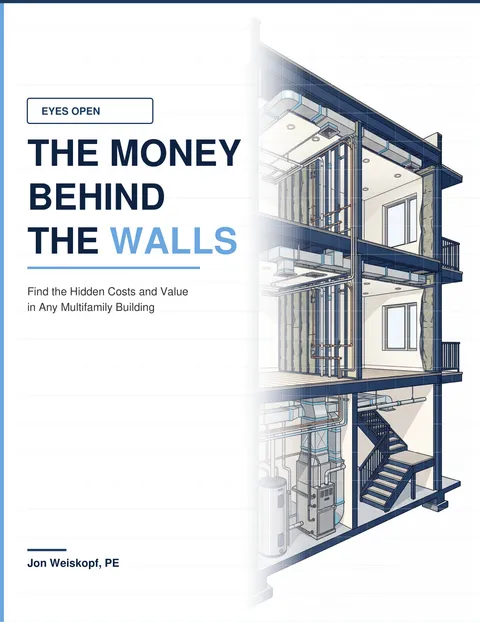
The Money Behind the Walls: walk six systems, see what's wearing out and what's wasting money, then turn what you find into a decision.
30-day money-back guarantee
Your bill went up again, and nobody can tell you why.
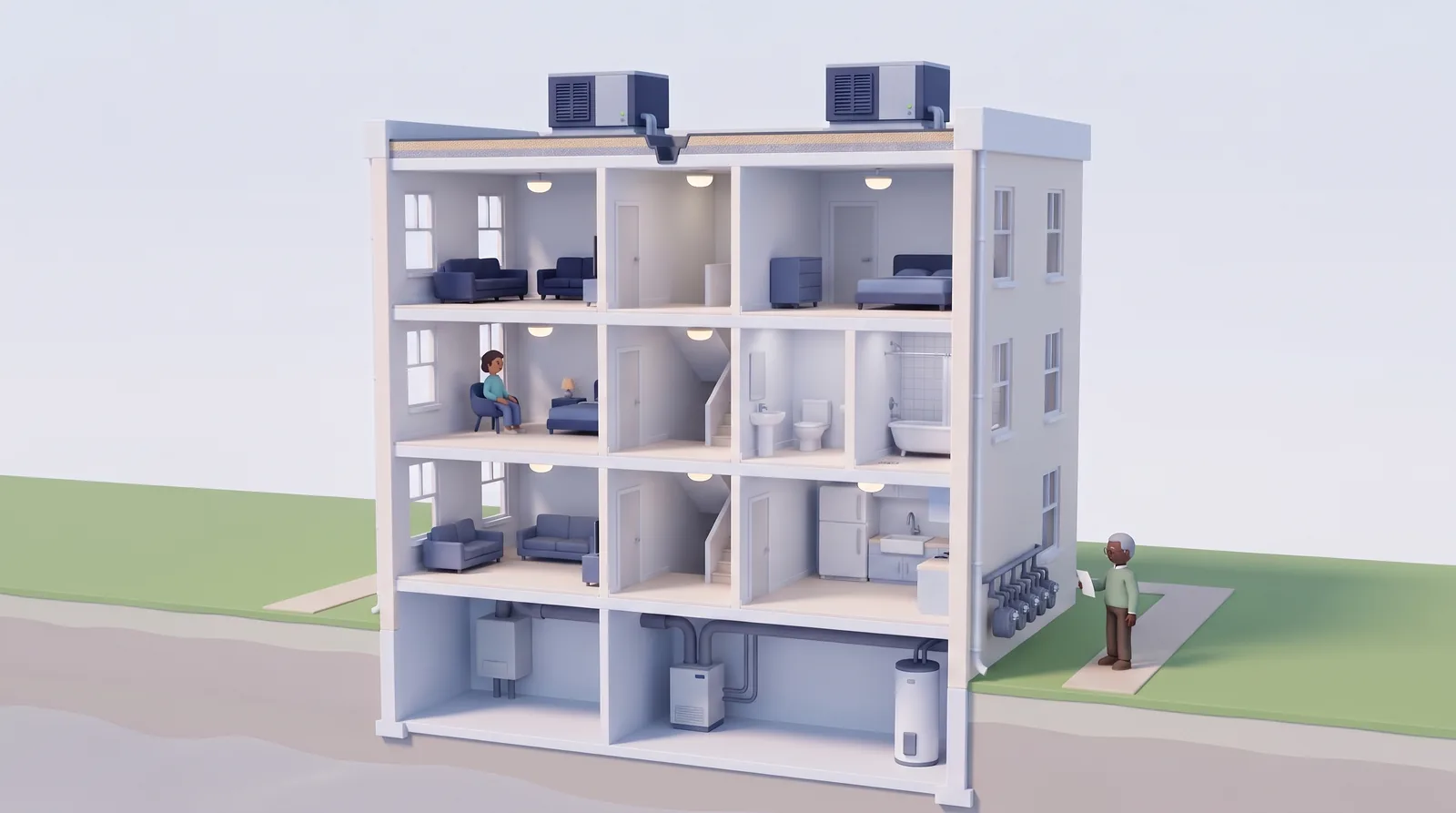
- Roof
- Windows
- Heating and cooling
- Lights
- Water heater
- Taps and toilets
- Meters
Your utility bill
- Roof
- Windows
- Heating and cooling
- Lights
- Water heater
- Taps and toilets
- Meters
Total$$$$$$$
A building energy audit you can run yourself
- 1Start with your own bills.Twelve months of every utility. They give you your real rate and the pattern.
- 2Walk six systems.For each: what to look for, what normal looks like, and what should make you nervous.
- 3Fill the workbook as you go.It does the math.
Then four questions decide it.
- 1What will it cost, against what you paid?
- 2Will it outlast how long you plan to own?
- 3What does it save on your bills, and how fast does it pay back?
- 4If it fails, what does it take with it?
What's in the download
- ContentsPart 1Part 2Part 3Part 4Part 5The guideFive parts: why the audit matters, the walk, the decision, proof, and when to call a pro.
- The workbookRecord the walk on one sheet; the second sheet does the math.
- Benchmarks at a GlanceThe benchmarksNormal life and replacement cost for each system, on one page.
- Worked ExampleA worked exampleOne 100-unit building, built in 1990, run through all four questions.

Energy audits are where I started.
As a junior engineer, I led a nationwide energy audit for the US Postal Service. Later I built a firm's commissioning and energy audit programs. This guide is how I read a building's bills against its systems.
30-day money-back guarantee. If your building is big or complex, it makes you a better client for the engineer you hire.
Not ready yet? Get your weekly lesson.